AI that fits a business your size.
We build AI systems inside small businesses, train the staff who use them, and build the websites and ad creative that send people to them.
The method is the same every time. Somebody writes down what the work actually is. The tool runs it once against that brief. A person checks the result against a written list before it leaves the building.
98industries we have built for, from notaries to flight instructors.
45ad creatives. See them. 63role kits written. 10briefs, free to read.

Try it now.
Three angles, three ads and one landing page, in about a second. Nothing you type here leaves this page.
A batch renders in minutes. The hours go into the human pass, where a person kills the ones that do not earn their place. Every system we build has that step in it.
What these three are arguing:One is about the time it hands back, one about what waiting costs, one about how small the switch is. If all three worked on the same person you wouldn't have learned anything.
The line from the ad, said again in bigger type.
- What it gives back
- What waiting costs
- What changes, and what doesn't
These are concepts. A person spends a few more hours turning one into the finished ad, and that is the work you are paying for.
The same bench has run this angle for real. 7 of the ads on the wall argue it. Here it is finished, and here is the page it points at.
 big claim
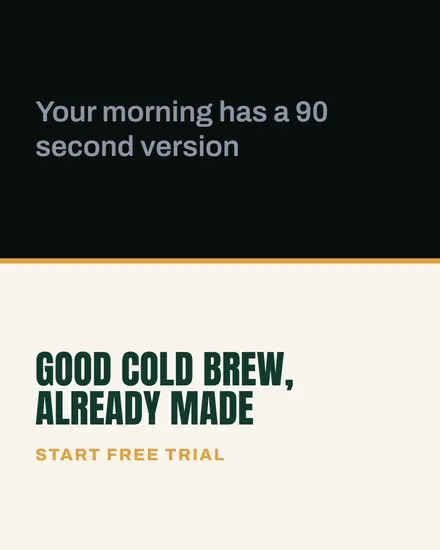 split
split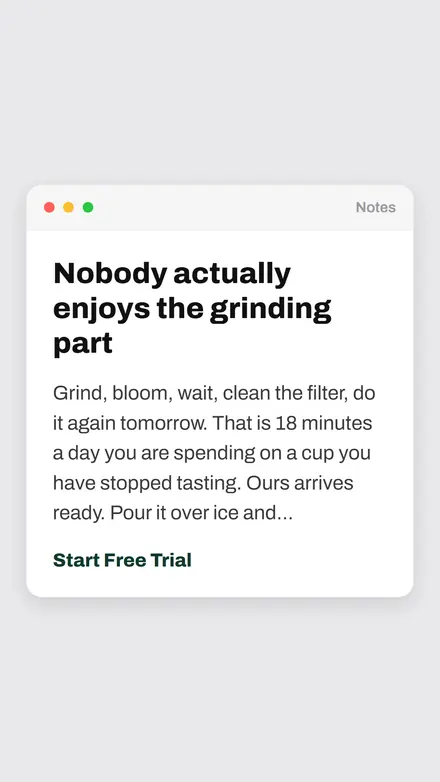 native note
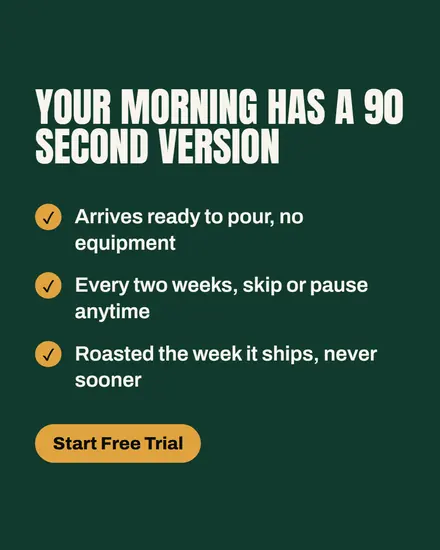 checklist
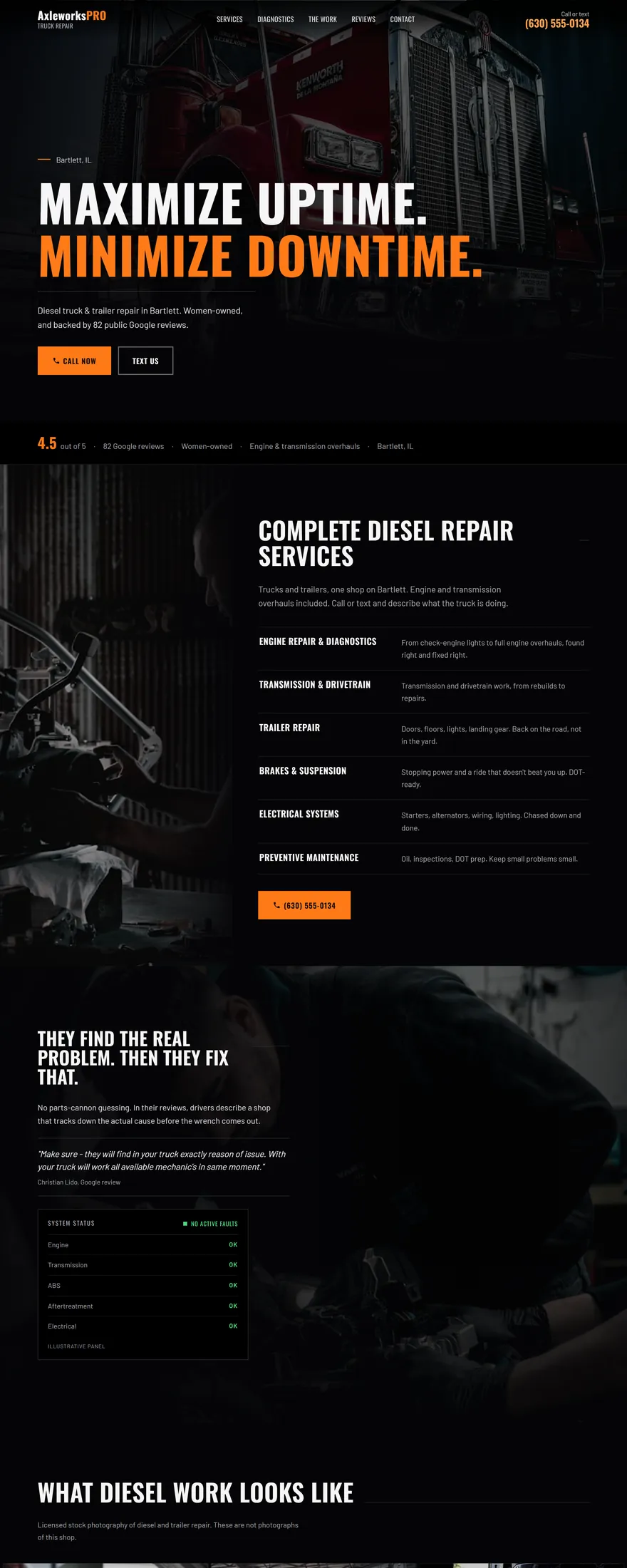 Axleworks Truck RepairA finished page off the same bench. Five
more, at full size, four stops down.
Axleworks Truck RepairA finished page off the same bench. Five
more, at full size, four stops down.
Made in this studio, for businesses we invented. None was made for a paying customer.
How it chose these, in plain words
Read the two boxes, sorted what you sell into a rough category, then picked three angles that do not overlap and pulled the lines written for that category. No model, no network, no account: the whole thing is a lookup table and a seeded shuffle running on your own machine.
What we sell.
Five services, most hands-on first. Start wherever the problem is. Every price is on the table below.
AI systems. The person who built all of this, for hire.
We build the system inside your business.
Everything on this page runs on systems we built: the wall, the tool that just wrote angles for whatever you typed, the process that keeps the prices flat. Consulting is hiring us to build yours. It starts with what your process actually is rather than what the documentation says it is, because these projects break on the requirements far more often than they break on the model.
Fourteen years as a senior business analyst before the AI work. Requirements someone can actually build from.
What fourteen years actually buys you
Sitting with the people who do the job and writing down what the work actually is. Mapping how it runs today and how it should run after. Getting the room to agree on what done means, in writing, before anybody builds anything, and then testing it against that. These projects break on the requirements far more often than they break on the model, and that is why this row is first.
Ran an LLM chatbot pilot inside a national health plan, where "the model said so" is not an acceptable answer.
Why the plan is not named
The plan doesn't get named. What the work taught is the part that transfers: an answer a reviewer can't trace back to something is not an answer, it is a liability with good grammar.
Built and shipped a retrieval assistant where every answer cites its source document, with a post-check that catches invented facts.
How the citation check works
Documents chunked and embedded, stored in PostgreSQL with pgvector on an HNSW index, retrieval with a re-rank pass. Confidence is scored and shown as direct, inferred or sparse, and a post-check rejects any answer carrying a fact the retrieved material doesn't support.
More of the same record, three more rows
Worked the model stack and agentic retrieval on a federal program under a Public Trust clearance.
What Public Trust means here
The clearance is real and it's the first thing government-adjacent buyers ask about. The work was on the program itself, not in a demo.
Designs LLM features for PHI and audit environments: what gets automated, what stays human-reviewed, what the audit trail shows.
Where the line gets drawn
HIPAA, CMS and FedRAMP exposure across the payer and federal work. This is judgment, not a certification.
Works across Claude, OpenAI, and open models, with the routing and cost controls that decide which one handles which request.
How the routing decides
Cost metering, quotas, routing by stakes and by cost, capability gating for providers that don't support a parameter, streaming, and evaluation harnesses. The question is never which model is best. It is which one should handle this request.
- BRIEF. What the job actually is, in the words of whoever asked.
- RUN. The tool does the pass it is good at, once, with that brief.
- PROOF. A person checks it against a list before it goes anywhere.
The scope goes on paper before the work does: what gets built, how long it takes, what it costs. No open clock, no invoice you didn't see coming.
priced on the call, here is whyTraining. Your own team, on your own paperwork, until they can run it without us.
Your staff, trained on your own work.
We take the two or three jobs your team repeats every week, write the loop for each one, and sit with the people who do those jobs until they can run it with nobody else in the room. On your own paperwork, not on a sample.
Sixty-three role specific kits are already written and published, each covering a real job, with separate tracks for ChatGPT, Claude and Microsoft Copilot, because those three do not behave the same and pretending they do is how people get burned. A session for your team is built off that spine and then rewritten around your actual paperwork.
Every loop we teach is explicit about the two things people get wrong: what never leaves a desk without a person reading it, and what never gets pasted into an AI tool at all.
The person teaching it spent fourteen years writing requirements inside healthcare payers, pharmacy benefit programs and a federal program under a Public Trust clearance, and ran an LLM chatbot pilot at a national health plan. In that world a wrong answer is not an embarrassment, it is a compliance problem. That is the standard the loops are written to, and it is why the checking step is not optional.
Half day
One team, one workflow. Everybody leaves with the loop for their own job written down, and one worked example they ran themselves.
Two days
Several teams, and a written standard your business keeps. This is the one that survives somebody leaving.
Train the trainer
One person inside your business owns it after we go, with the material and the authority to say no to a bad output.
Priced on the call, like the consulting. It depends on how many people, how many workflows, and whether we are writing your standard or teaching one you already have. Nothing gets quoted before somebody knows the shape of it.
priced on the call, here is whyWebsites. Where the ad clicks land. We build it before you pay.
We build the site before you pay.
We need three things: the trade, the town, and what the phone should ring about. We build the whole page and put it on a real URL, with your hours and your phone number in it. Read it, and pay when you want it live. If it is wrong we fix it. If it is still wrong you walk away and owe nothing.
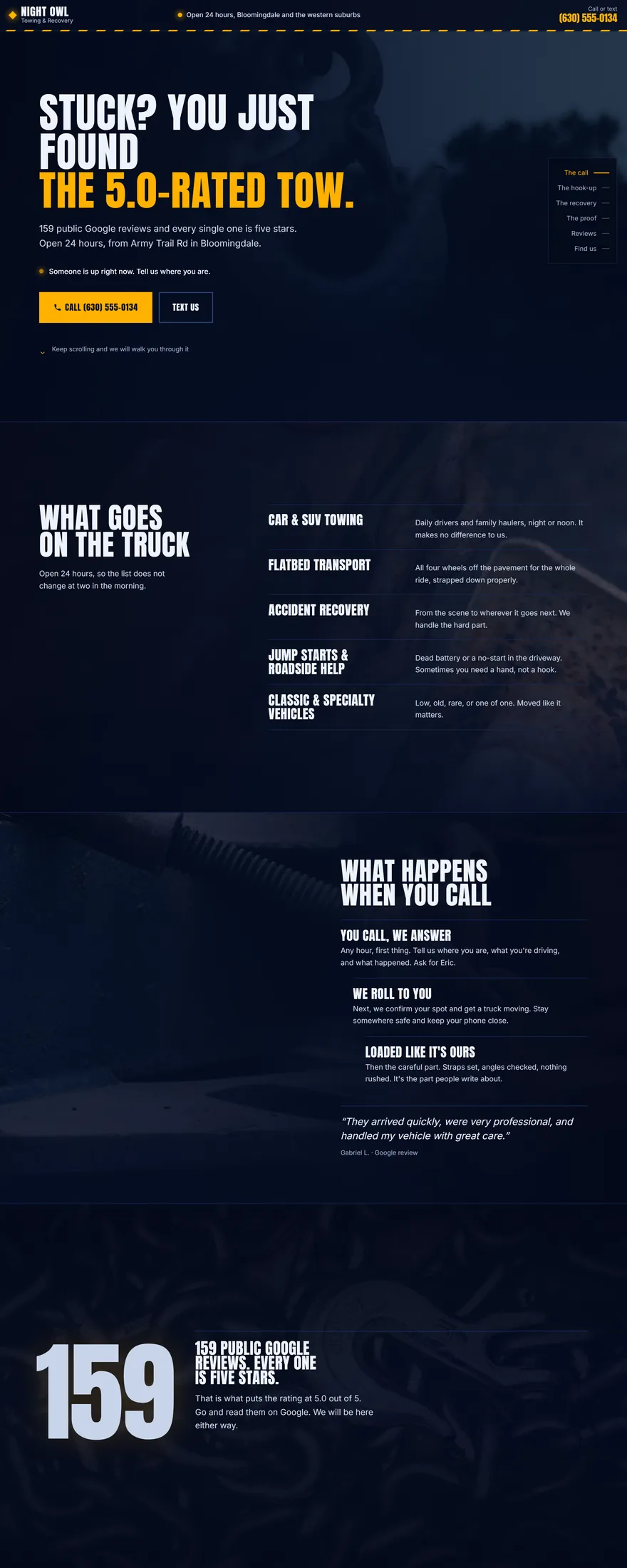
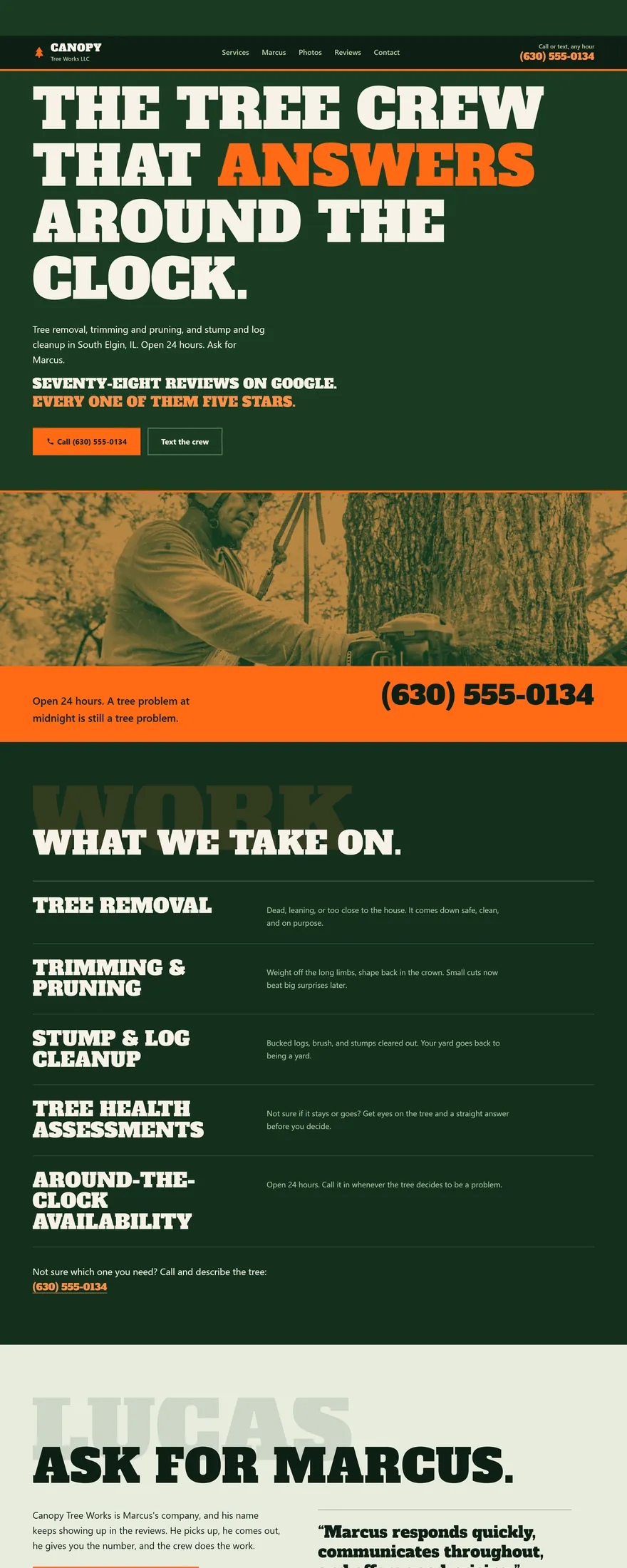
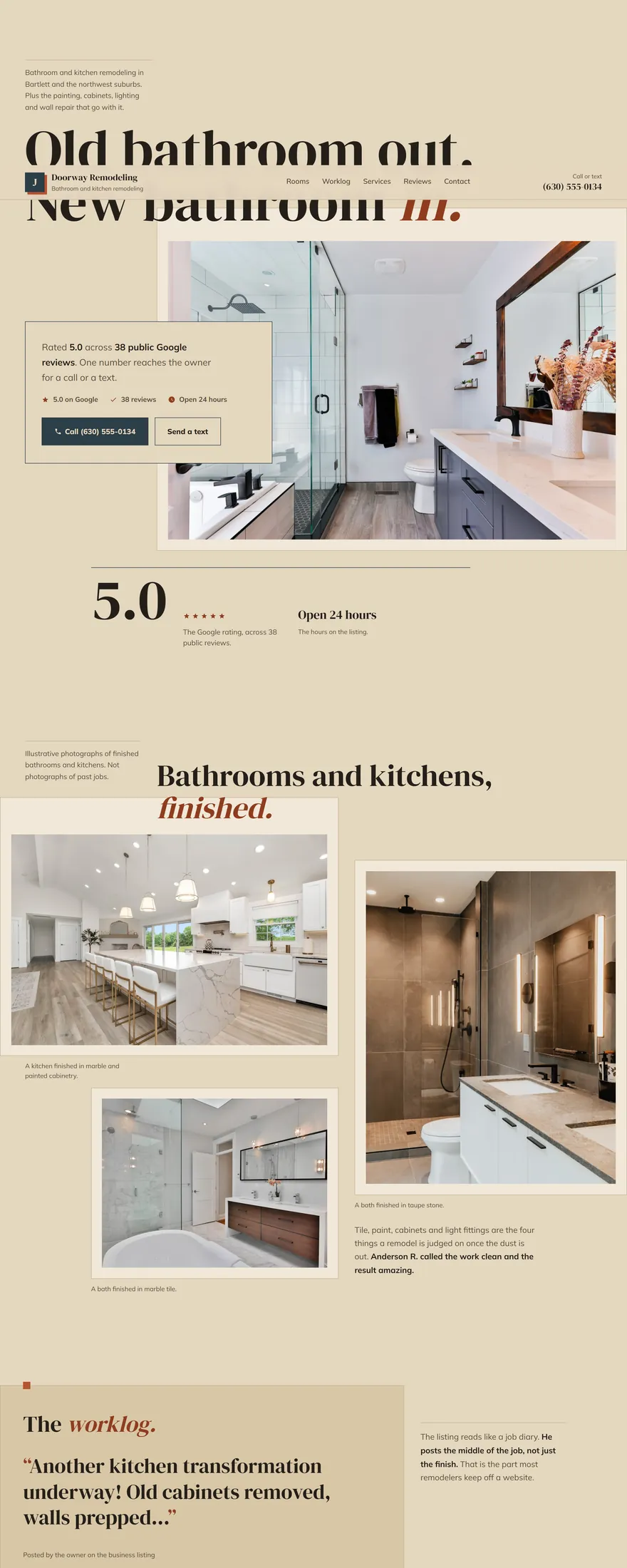
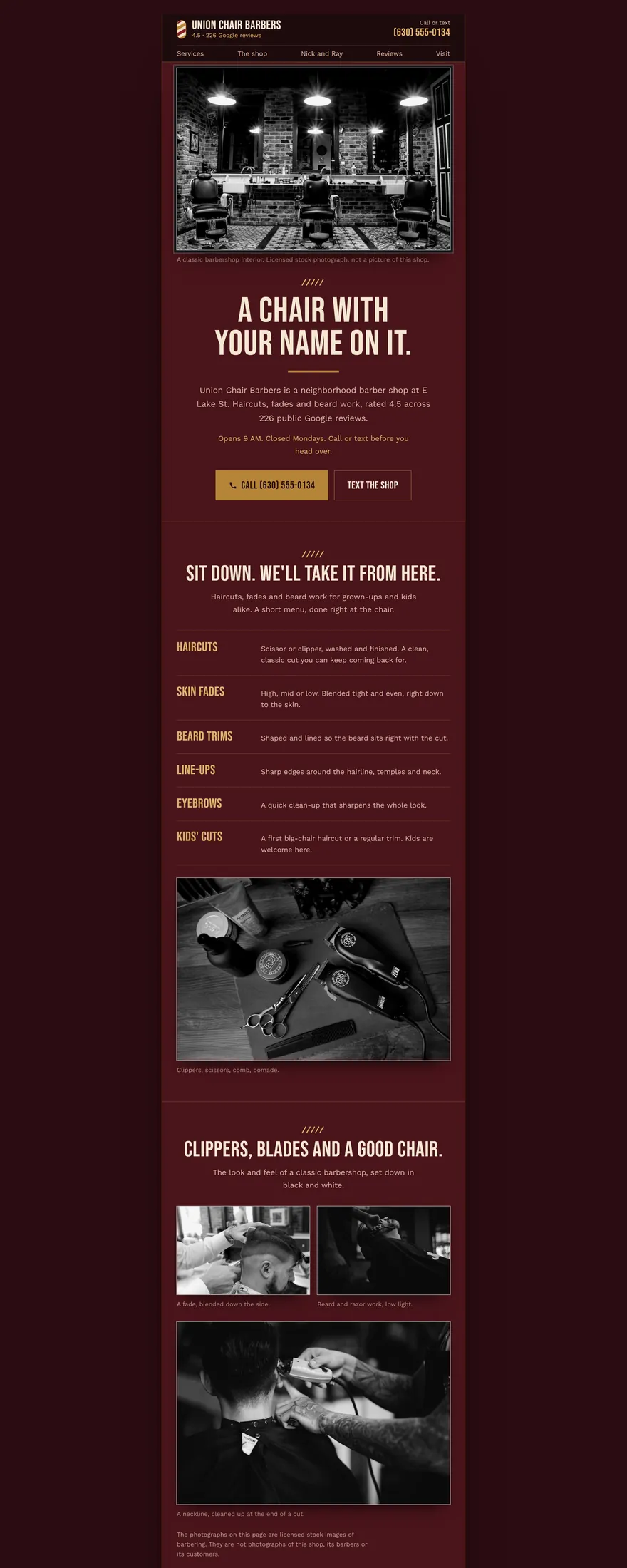
Made in this studio, for businesses we invented. None was made for a paying customer.
What the five pages are, one line each
- Diesel and fleet repair. Uptime is the whole argument, and the service menu says what each job actually is instead of listing nouns.
- Towing. Written for somebody reading it on the shoulder of a road: call and text in the first screen, then what happens after you call, in order.
- Tree service. The owner is named in the headline block because that is what the reviews are about, and the number repeats the whole way down.
- Bath and kitchen remodel. Finished rooms up front, with a note under them saying which photographs are illustrative rather than past jobs.
- Barber shop. A short menu, the hours, and one number to call, because that is the entire decision.
Where the photography is licensed stock, the page says so under the picture. A trade website that passes off stock as its own work gets caught by the first customer who walks in.
What on spec actually means, four steps
- One. You tell us the trade, the town, and the one thing you want the phone to ring about.
- Two. We build the whole page. Real copy, real hours, real phone number, on a real URL you can send to your family.
- Three. You read it. If it's wrong, say so and we fix it, or walk away. Nothing has changed hands.
- Four. You pay when you want it live, and then it's yours.
The five above are a sample. Open the archive of 120 spec builds across 30 trades and read any of them at full size. Every business in that archive is invented, and none of the sites was commissioned, sold or delivered to anyone.
See what a website costsAds. What sends people to the page. Twenty five creatives on four different reasons to buy.
Three ads is not a test.
The algorithm learns by comparing, and three ads built on one idea give it almost nothing to separate, so it spends the first two weeks of a budget discovering they are the same ad wearing different photographs. Twenty five, built on four different reasons to buy, is a real test.


Three ads. Almost nothing for the algorithm to compare.
Every angle in the batch. Press one to see how much of the batch argues it.

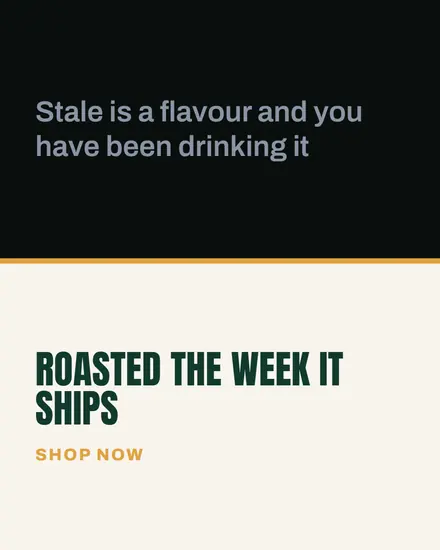

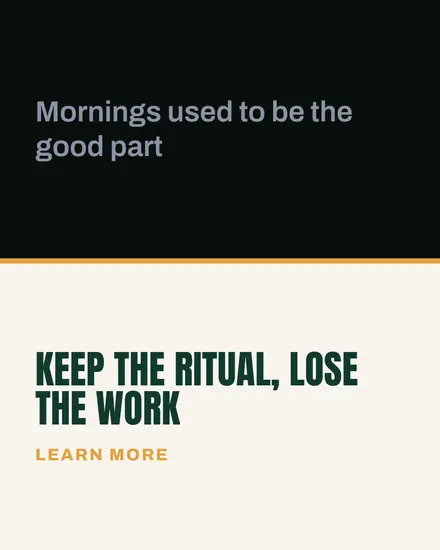
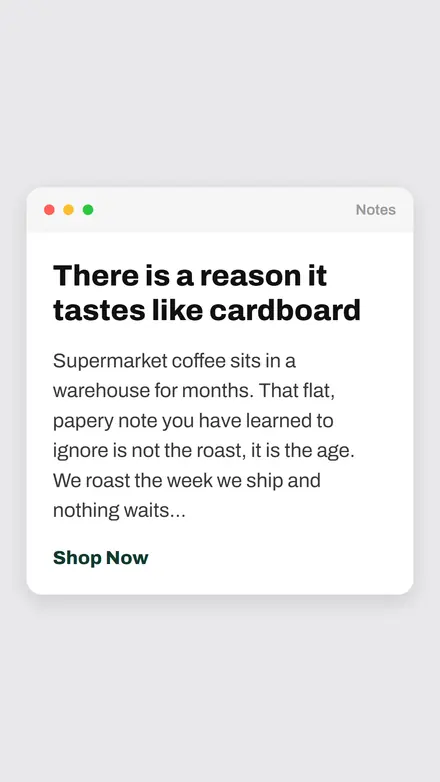
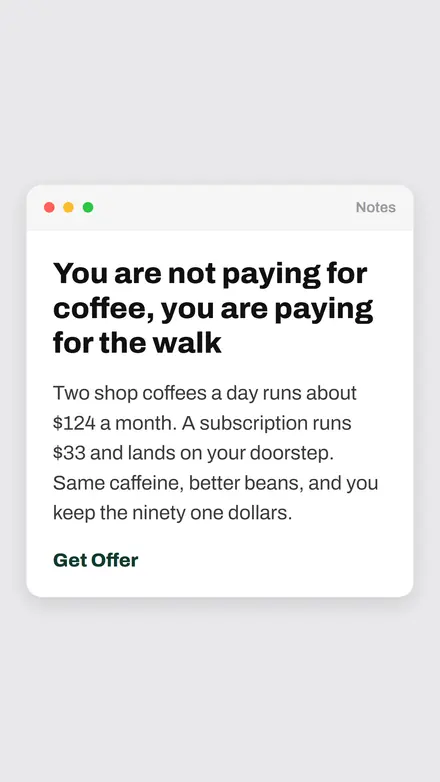
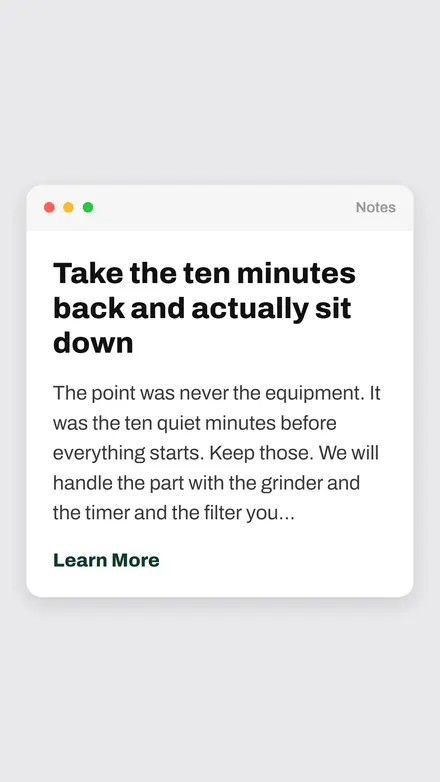
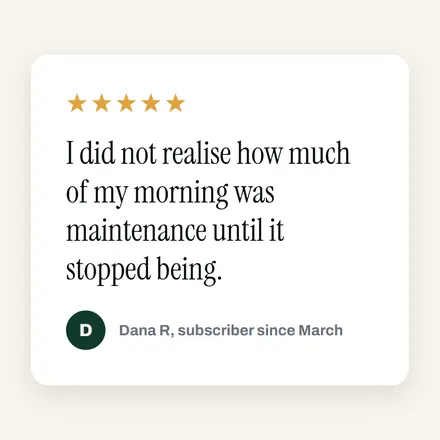

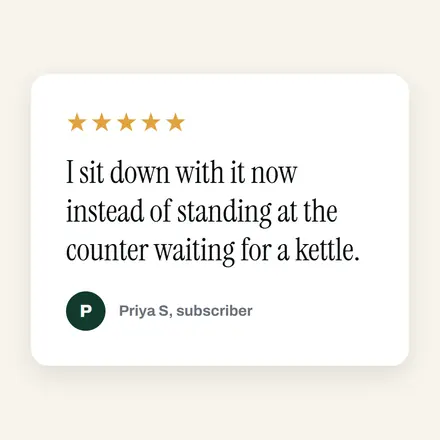
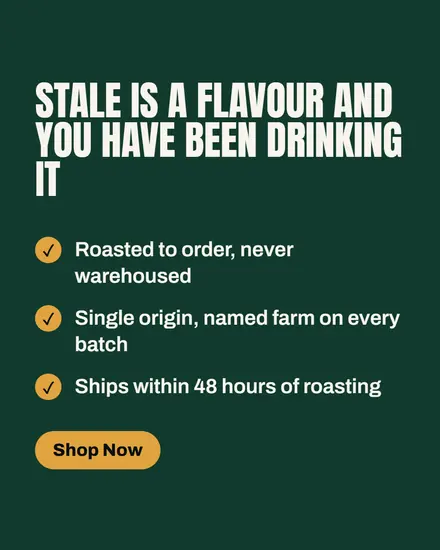

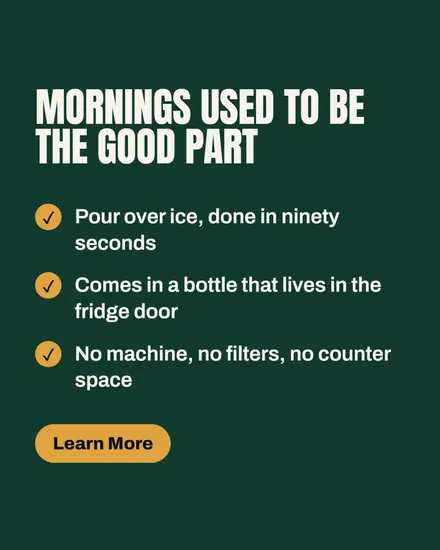
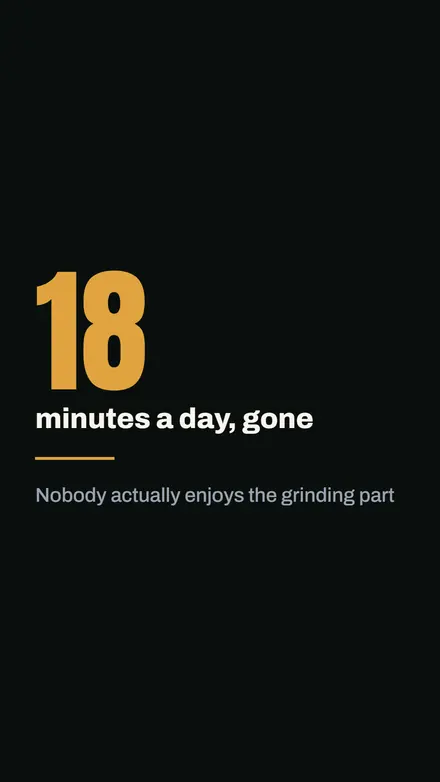

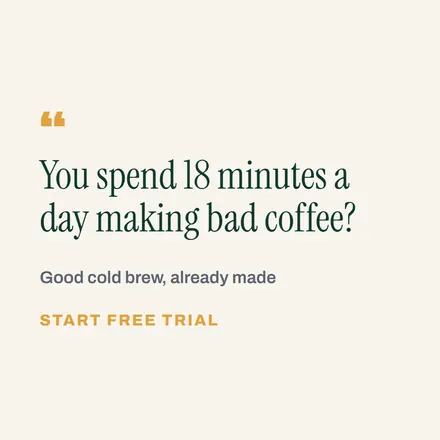



What one full batch looks like.
Real ads off our own bench, built for demo brands. Spec work, and we say so. The whole wall, draggable.
The wall runs seven angles: time, cost, ritual, quality, speed, volume and boundary. This one batch argues four of them, because that is what this job needed.
Grab the wallWhat is actually in a batch, seven formats
One angle is not one ad. Each reason to buy gets built in whichever of these suits it, at 1:1, 4:5 and 9:16. What stops one person is not what stops the next one, and the format is half of that.
- Big Claim
- Split
- Native Note
- Testimonial
- Checklist
- Stat
- Question
One batch, all the way through.
Northbound Coffee is a brand we made up so we could show a whole job. Every asset below is real production. None of it was sold to anybody.
01 THE BRIEF
"Cold brew subscription. Buys it for the ten minutes it saves in the morning. Says: I don't want to think before coffee."
That is the whole brief. Three sentences a customer actually said beats a brand guide.
02 THE ANGLES
Time. Quality. Cost. Ritual.
Four genuinely different reasons to buy, not four ways of saying the same thing. This is the part that decides whether the test tells you anything.
03 THE FORMATS
Big claim. Split. Native note. Testimonial. Checklist. Stat. Question.
Each angle gets built in whichever formats suit it, at 1:1, 4:5 and 9:16. That is how four reasons become twenty five assets. Some people read a headline. Some people read a list. Some people only stop for something that doesn't look like an ad.
04 THE HUMAN PASS
KeptThe line does the work without a picture, and it still lands when it is cropped to 9:16.
CutThe question format earns its place in plenty of batches. In this one it asked something the buyer had already answered by the time they reached it.
This is the part that takes the hours. The machine makes plenty. A person decides what is allowed out.
05 WHAT SHIPPED
Twenty five assets, a testing matrix, and a distinct hook on every one.
You run them. We never touch your account.
Already running ads? It is fifteen minutes on the ads you're running now, off a link you send beforehand, and you leave with specific notes on where attention drops and what we would test next. No deck, no discovery call.
10 rules that changed after your AI was trained
Every tool a person can reach was trained before these dates. Ask one about any of them and it answers confidently, in the old numbers. Each brief names the rule, the date it moved, and the register it can be checked against. One page each, free.
Run it yourself
A kit is what the training looks like when nobody is in the room. Pick your role and you get the loop: brief the task properly, run the tool once, then check the output against a list before it goes anywhere near a client. Separate tracks for ChatGPT, Claude and Microsoft Copilot.
Sixty-three kits. $39 each, or every one of them for $15 a month, updates included.
AI Session-Note Discipline Kit for Texas Behavior Analysts
Written for Texas behavior analysts.
$39Daymark Press, on Gumroad
AI Records Discipline Kit for Florida Public Adjusters
Written for Florida public adjusters.
$39Daymark Press, on Gumroad
AI Claim-File Discipline Kit for Florida All-Lines Adjusters
Written for Florida All-Lines adjusters.
$39Daymark Press, on Gumroad
Pricing.
Every price, in one place. Systems and training are scoped in writing after the call, because the shape of that work is not knowable before it.
01AI systemsA system in your businessNo number
Scoped in writing before anything starts. Bring the problem to the call and you leave with the shape of the work, how long it takes, and what it costs.
This row and the one under it carry no figure, because they are the two things here that don't exist yet when you arrive. A number printed before anyone has seen the problem is a number that gets revised, and a revised number is the thing everybody hates.
02TrainingTraining for the people who run itNo number
Priced on the call, on how many people and how many workflows. The written version of the same method is row 05, and it costs thirty nine dollars.
Half a day with one team is not the same job as two days with four of them and a written standard at the end, so it is not the same number. Nothing gets quoted before somebody knows which one it is.
03WebsitesA websiteFrom $1,150
Three builds and three care plans. The build is a fixed price and you see the finished site before you pay it. The care plan is optional and cancellable.
If the scope changes, we re-quote before anything else happens. Nobody discovers a new number at the end.
04Ad creativeA batch of adsFrom $265
Three tiers, all fixed. The middle one is the smallest batch that is genuinely a test.
- 10 image ads
- 10 hooks
- Copy included
- All 3 placements
- 25 image ads across 4 angles
- 3 short-form videos
- Full testing matrix
- A drop every week
- Iteration on winners
- 5 angles in rotation
The price does not move with your budget, because we never see your budget. You run the ads and you keep the account.
05KitsThe loop on paper$39
One kit for one role, or the membership for all of them. Bought from Daymark Press on Gumroad, not from us. Card or PayPal, instant download, and updates land where you bought it.
Buyers get updates free, so a kit is not a thing you buy again when the tools move. See All-Access, or read what is in a kit first.
Flat price, no retainer. No hourly billing, no percentage of spend.
There is a version of this you can walk, and it is a work in progress. One room, one bench, and most of what is on the bench does not open yet. It needs a decent connection and about two minutes, and everything in it is also written above.
Common questions
Answered straight, starting with the awkward ones. Or ask this page directly and it will show you the passage and where it lives.
It searches what is actually written here and shows you the passage and where it lives. If the page does not answer you, it says so rather than inventing something.
Book a free 15-minute call.
Write down the job your team repeats most and roughly how long it takes. We reply with where AI actually fits and where it does not, hire us or not. If you are running ads right now, ask for the free teardown instead and keep it either way.
Not ready to talk to anybody? Buy a kit and read the method yourself.
What the fifteen minutes look like
- You describe the job that eats the week. Five minutes.
- We say where AI actually fits and where it does not. "Nowhere" is a real answer and you will hear it if it is true.
- If there is something worth building, the shape of it arrives in writing within two days. No deck, no drip campaign.
Hookline exists because the same three tired ads and the same abandoned tool licence keep showing up at businesses that deserved better advice.